
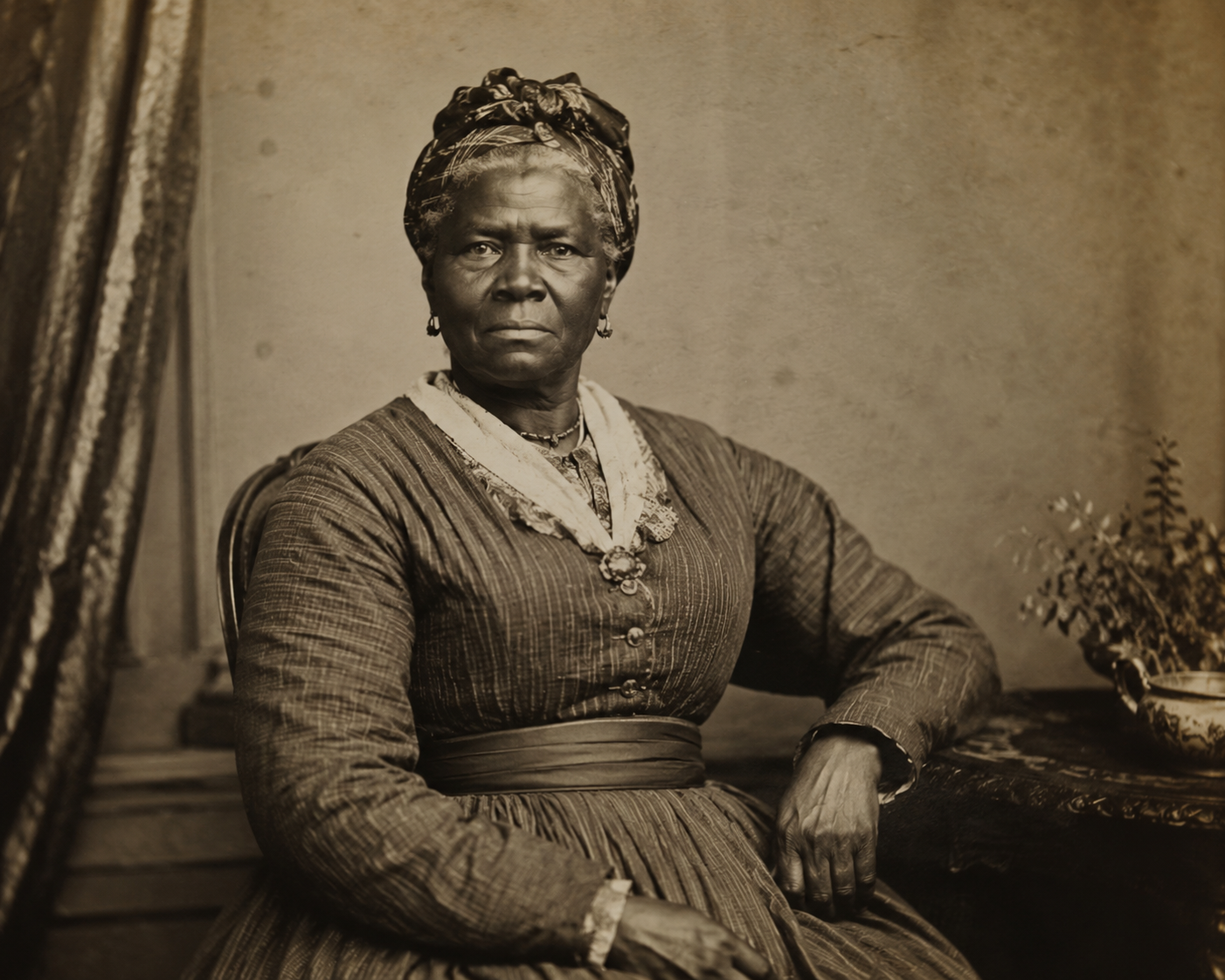
Born into slavery, Maria Everts became a prosperous landowner and wine producer whose family would later be closely associated with Constantia. Her remarkable rise, however, carries a darker truth: she also owned and traded in enslaved people.
The early history of Cape wine contains many celebrated names, but few stories are as complex as that of Maria Everts.
Born at the Cape around 1663, Maria was the daughter of Evert van Guinea and Anna, or Hoena, van Guinea, who had arrived from West Africa aboard the Hasselt in 1658. Her father was emancipated the following year, while Maria and her mother remained enslaved before Maria herself eventually gained her freedom.
By the beginning of the eighteenth century, she had transformed her circumstances.
The records show a woman accumulating land, livestock, agricultural produce and vineyards at a time when the Cape’s colonial economy was expanding rapidly.
A substantial wine producer
The Cape’s agricultural returns provide unusually clear evidence of Maria’s activities.
In 1700, she was recorded as owning 4,000 vines, producing two vats of wine, and possessing four enslaved people.
By 1709, her vineyard had grown to approximately 6,000 vines, producing around two leaguers of wine. Her holdings also included cattle, sheep and grain, while her workforce consisted of a white labourer and ten enslaved people.
These figures place Maria among the more substantial agricultural producers of her time.
Her properties extended across several parts of the Cape, including land behind the Kloof towards the sea, associated with the area later known as Camps Bay, as well as De Mosselbank and Klavervalleij.
She was not simply cultivating a few vines for domestic consumption. She was operating within the commercial agricultural economy of the colony.
A remarkable reversal
Maria’s success would have been extraordinary under any circumstances, but her origins make it particularly striking.
She had been born into slavery and subsequently acquired the freedom and property necessary to establish herself as an independent farmer.
Yet her story cannot be presented as a simple tale of emancipation and prosperity.
By 1700 she owned enslaved people, and by 1709 that number had risen to ten. Surviving evidence also indicates that she participated in transactions involving the purchase and sale of enslaved people.
Maria had therefore crossed one of the most significant economic boundaries of colonial society.
She had moved from being enslaved to becoming an owner of enslaved people herself.
There is no evidence that she operated an international slave-trading voyage on the scale of European merchants or the Dutch East India Company. The evidence instead places her within the Cape’s domestic slave market, where enslaved people were bought, sold and transferred between owners.
The connection to Johannes Colijn
Maria’s importance to wine history extends beyond her own vineyards.
Her son Johannes Colijn, born in 1692, would become closely associated with the development of Constantia wine.
Colijn is regarded by historians of Cape wine as an important figure in establishing the reputation of Constantia’s wines during the eighteenth century. His later agricultural interests and winemaking activities helped connect the Cape’s developing wine industry with an increasingly international market.
The connection gives Maria’s story an unusual place in Cape wine history.
The celebrated Constantia tradition was not simply the product of European settler families. Its story also passes through Maria Everts, a woman born into slavery who became a successful free Black farmer and wine producer.
Wine and slavery
Maria’s life also exposes an uncomfortable reality about the development of the Cape’s agricultural economy.
The vineyards did not operate independently of slavery.
In 1709, the same farm producing thousands of vines and substantial quantities of wine also relied upon ten enslaved people. Livestock, grain, vineyards and human labour formed part of one interconnected agricultural enterprise.
This was characteristic of the wider Cape economy, where enslaved labour became fundamental to farming, domestic service, construction and other forms of production.
Maria’s position within that system was unusual, but not unique. Her life demonstrates that social and economic identities in the early Cape could be extraordinarily complicated.
A person could be born into slavery, obtain freedom, acquire property and eventually become a slave owner.
Her final years
Maria’s prosperity did not last indefinitely.
The devastating smallpox epidemic of 1713 swept through the Cape, claiming thousands of lives.
On 8 June 1713, Maria signed her final will. She died soon afterwards, while her son Jacobus was also among those who perished during the epidemic.
Her will and estate records provide valuable evidence of the property and wealth she had accumulated during her lifetime.
They also preserve the story of a woman who had moved through several levels of Cape society within a single generation.
Remembering Maria Everts
Maria Everts does not fit comfortably into a conventional historical narrative.
She was born enslaved but became free. She was a woman in a society dominated by men, yet accumulated property and operated a substantial agricultural enterprise. She cultivated thousands of vines and produced wine at a time when the Cape industry was still developing.
She was also a slave owner and participant in the Cape’s internal slave market.
All of these facts belong to the same life.
To remember only her rise from slavery would leave out an important part of the historical record. To remember only her ownership of slaves would be equally incomplete.
Maria Everts offers instead a glimpse into the complicated world of the early Cape, where freedom, wealth, race, land and slavery were closely connected.
Her vineyards belonged to an emerging wine economy. Her property formed part of the expansion of colonial agriculture. Her enslaved workforce reveals the system that supported much of that prosperity. And through her son Johannes Colijn, her story became connected to the rise of Constantia, a name that would eventually become synonymous with some of the world’s most celebrated wines.
Maria Everts began her life as property. She ended it as a property owner. Between those two points lies one of the Cape’s most revealing stories of slavery, ambition, wine and wealth.