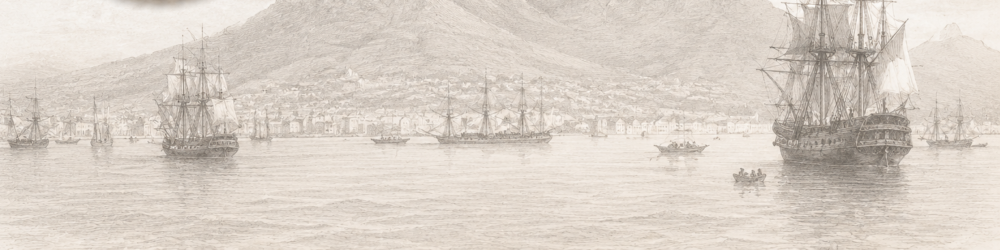


The story of the Cape Chronicle is more than the story of newspapers, printing presses and headlines. It is the story of a name that has travelled through generations, carrying with it the memories, hopes and voices of the people of the Cape.
For more than 175 years, the words Cape Chronicle have represented something greater than a publication. They have come to symbolise the desire to record the life of this remarkable region — its triumphs and struggles, its people and places, its moments of joy and sorrow. While different newspapers have carried the name at different times, each became a custodian of a tradition that belongs not to one person, but to the Cape itself.
The roots of this story reach back to 1850, when the passing of George William Silberbauer placed the future of his publishing enterprise in uncertain hands. At a time when many businesses would have disappeared, Mrs Jane Silberbauer stepped forward and ensured that the voice of the press continued to be heard. Through her courage, determination and dedication, a foundation was laid for a tradition of Cape journalism that would endure long beyond any single lifetime.
From those early beginnings, the idea of a Cape Chronicle was born — not merely as a newspaper title, but as a promise: to chronicle the events that shaped the lives of the people who called the Cape home. As the Colony grew and changed, so did its newspapers. The name itself became part of the language of the Cape, a natural expression for a publication dedicated to preserving the story of its people.
In 1870, William Foster gave new life to the name when he published The Cape Chronicle. His newspaper was a separate venture from the earlier Silberbauer publishing enterprise, yet it carried the spirit that the name had come to represent. Foster became one of the many guardians of the Chronicle tradition, ensuring that the people of his generation had a place where the events of their time could be recorded and remembered.
Many years later, Roger Melville became another custodian of the Cape Chronicle name. His edition was again its own publication, shaped by the challenges and opportunities of its era. Yet, like those before him, Melville understood that the value of the Chronicle was not only found in ink and paper, but in the trust placed in its pages by its readers.
The Cape Chronicle 4.0
A new chapter began in 2020, when Driko Maritz, a Bellville-born resident of the Cape, revived the Cape Chronicle as a digital publication. Inspired by the heritage of the name and recognising that history was increasingly being recorded through new technologies, Maritz carried the Chronicle into the digital age. His vision was not simply to create another online publication, but to continue a tradition — to provide a place where the stories of the Cape’s people, communities, businesses and history could be preserved for future generations.
Each edition of the Cape Chronicle has stood on its own, created by different people in different times. Yet they are connected by something deeper than ownership or publication dates. They are connected by a shared belief that the stories of ordinary people matter, that communities deserve to be remembered, and that every generation leaves behind a chapter worth recording.
The custodians of the Cape Chronicle have changed, the technology has changed and the world around it has changed. But the purpose has remained the same: to be a faithful witness to the life of the Cape.
Today, the Cape Chronicle carries forward a name that has survived through changing centuries. It honours those who came before, celebrates those who contribute today and looks towards those who will tell tomorrow’s stories.
Because a chronicle is not just a record of the past.
It is a promise that the stories of the present will never be forgotten.