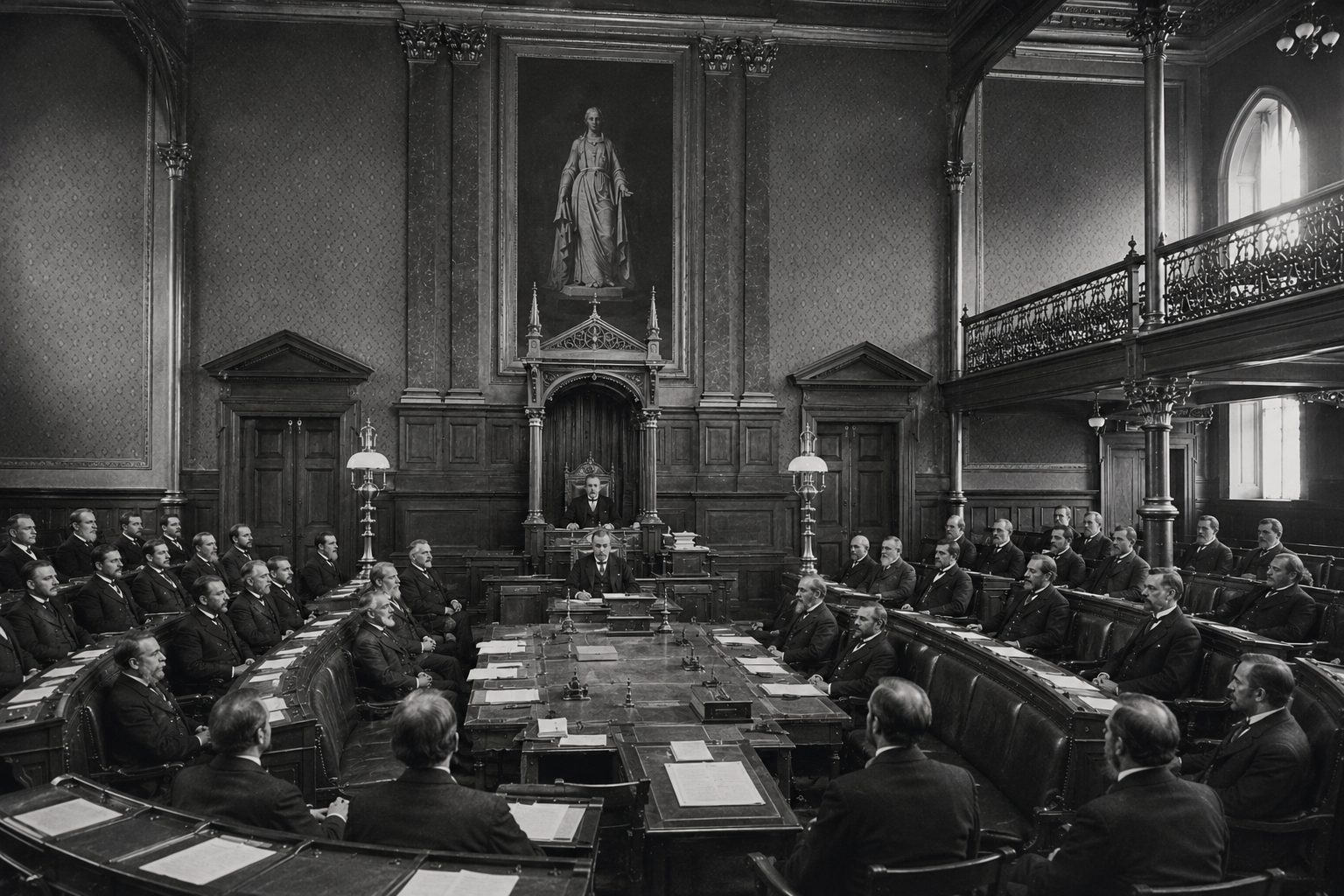

If Sir Theophilus Shepstone’s proclamation of April 1877 was intended to quiet the Zuid Afrikaanse Republiek, it has instead awakened a deeper and more enduring resistance among its leaders. The men of Pretoria did not accept British authority as a settlement; they received it as an imposition—one to be contested first by petition, and, if need be, by sterner means.
At the forefront of this response stands Paul Kruger, whose name has quickly become synonymous with the Republic’s defiance. Alongside him were figures such as Marthinus Wessel Pretorius and Piet Joubert, men not given to rashness, yet united in the conviction that their המדינה (state) had been wrongfully seized. Their immediate strategy was not rebellion, but appeal. Deputations were organised and dispatched to Britain, seeking redress from the very government that had sanctioned the annexation.
This approach reveals much about the character of the Boer leadership. They did not reject British authority lightly; indeed, many had long experience of negotiation with imperial officials. But they insisted that Shepstone’s justification—that the Republic was collapsing into disorder and invited British protection—was exaggerated, if not altogether unfounded. In their view, the annexation rested on claims that could not bear scrutiny, and on promises of stability that had yet to materialise.
There is, too, a deeper grievance at play—one not easily addressed by colonial policy. The leaders of the Zuid Afrikaanse Republiek regard their independence not as a convenience, but as a right secured through hardship and migration beyond the Cape frontier. To them, British annexation is not merely administrative change; it is a reversal of history itself.
From London came hesitation rather than resolution. The Colonial Office, already entangled in its broader scheme of South African confederation, found itself confronted by a delegation that spoke with clarity and persistence. Yet the machinery of empire moves slowly, and while debates unfolded in Westminster, discontent in the Transvaal only deepened.
What is most striking is how swiftly the tone in Pretoria has shifted. Where there was once cautious engagement, there is now a growing sense that petitions alone will not suffice. Public meetings have become more resolute; the language of rights has hardened into the language of resistance. Though open conflict has not yet broken out, the ground upon which peace rests has grown increasingly uncertain.
The implications for relations with Britain are profound. By contesting the annexation through formal channels, the Boer leadership has forced the imperial government into a dilemma: either uphold Shepstone’s act and risk alienating the very population it seeks to govern, or concede error and weaken its authority across southern Africa. Neither course promises ease.
For the Cape, this unfolding dispute serves as a warning. The annexation of the Transvaal was presented as a measure of stability; the response from its leaders suggests instead the beginnings of a prolonged struggle over sovereignty and trust. Should London fail to reconcile its policy with the sentiments of the Republic’s people, it may find that authority proclaimed is far easier than authority maintained.
In the end, Pretoria’s answer is simple, even if its consequences are not: the Zuid Afrikaanse Republiek does not consider the matter settled. And until that conviction is addressed, no proclamation—however boldly issued—will bring lasting peace to the interior