
Skip to content
November Issue:
Donate R500 to the Cape Chronicle during November
Header Image
Monday October 26, 2026
The Cape Chronicle

The Cape Chronicle

Events that shape the Cape since 1850

  • The Cape Chronicle: A Name Written Into the Heart of the Cape
  • About us
    • Editorial Charter
      • Editorial Team
    • Donate
  • Work for us
  • Support Local
  • Classifieds
    • Classified Ads – 1861
  • Contact us

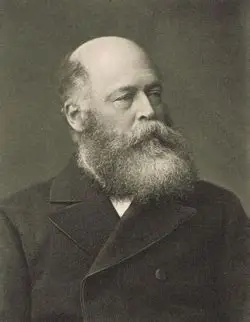
Author: Charles Rennick

Parliamentary Correspondent, The Cape Chronicle, 1865–1884


Charles Rennick was born in 1839, the son of a Scottish schoolmaster who had emigrated to the Cape in the 1830s. He was educated largely at his father's knee, showing an early appetite for argument and debate that made him, by his own later admission, an insufferable dinner guest before he ever picked up a pen professionally. He trained briefly for the law but abandoned it, finding he preferred writing about disputes to arguing them.

He joined The Cape Chronicle in 1865 under Edmund Carrow's predecessor's tenure — technically still under William Foster in his final years — and was given a new, untested assignment: a column devoted entirely to the doings of the colonial parliament. No paper in the colony had thought the subject worth a dedicated writer before; sittings had been covered, when covered at all, as a paragraph or two buried among shipping notices. Rennick treated it instead as continuous drama, with recurring characters, rivalries, and running jokes, and readers who had never cared for politics found themselves following it like a serial.

His prose was sharp-tongued and occasionally reckless. He was hauled before the Speaker's chair more than once for characterizations members considered ungentlemanly, and at least one horsewhipping was threatened, though never carried out, by a legislator Rennick had described in print as possessing "the debating instincts of a startled sheep." Colleagues at the paper found him difficult — vain about his phrasing, prone to filing late, and dismissive of the paper's other correspondents — but even his critics conceded that circulation on parliamentary sitting days noticeably rose whenever his byline ran.

Rennick's influence extended past his own copy. He is credited with training the Chronicle's newsroom to treat political coverage as a serious, standing beat rather than an occasional assignment, a shift the paper never reversed after his departure. He left the post in 1884, reportedly after a falling-out with the paper's management over editorial interference in one of his columns, and spent his later years writing occasional letters to rival papers under a pseudonym that fooled almost no one. He died in 1897.
1873 to 1909 Cape History

Pretoria Answers: The Republic’s Reply to Shepstone’s Proclamation

Charles Rennick30 August 187721 July 2026

If Sir Theophilus Shepstone’s proclamation of April 1877 was intended to quiet the Zuid Afrikaanse Republiek, it has instead awakened a deeper and more enduring resistance among its leaders. The…
Cape History

Shepstone’s Charge and the Cost to London

Charles Rennick20 August 187721 July 2026

Sir Theophilus Shepstone’s arrival in the Zuid Afrikaansche Republiek was no ordinary diplomatic errand. In 1876, Lord Carnarvon gave him a special commission to discuss federation with the Transvaal government,…

“Power to the Cape: Molteno Takes the Helm as First Prime Minister in Historic Shift from Imperial Rule”
1860 to 1872 Cape History

“Power to the Cape: Molteno Takes the Helm as First Prime Minister in Historic Shift from Imperial Rule”

Charles Rennick30 November 187221 July 2026

CAPE TOWN — In a moment that may redefine the future of governance at the southern tip of Africa, John Charles Molteno has today assumed office as the first Prime…

1860 to 1872 Cape History

Cape Colony Granted Responsible Government: A Milestone in Colonial Self-Rule

Charles Rennick23 November 187221 July 2026

By Our Political Correspondent, London London, 23 November 1872 — In a landmark development for British colonial policy in southern Africa, the Cape Colony has today been granted full responsible…

Classified Ads

Timeline of the Cape

  • 1860 to 1872
  • 1873 to 1909
  • 1910 to 1948
  • 1949 to 1961
  • 1962 to 1984
  • 1985 to 1994
  • 1995 to 2005
  • 2006 to 2025

Subscribe to Our Newsletter

Oh hi there!!
It’s nice to meet you.

Subscribe to receive awesome content in your inbox, every Monday at 08:00.

We don’t spam! Read our privacy policy for more info.

Check your inbox or spam folder to confirm your subscription.

Reader opinions

  • Cape Chronicle launches R75 adverts for Small Businesses | The Cape Chronicle on Classified Ads – 1861
  • Albert on Hello Cape Town
  • Elaine van Vuuren on Hello Cape Town
Our October issue is sponsored by
Our August issue is made possible by
Advertise with us at the
A Work in Progress

The Cape Chronicle is a work in progress and are updated as and when resources allows.

We highly recommend readers to subscribe to our newsletter to get regular updates.
Our new team of reporters are currently being updated and articles will soon be upgraded with photos of the time.

Our September issue is made possible by
Discover the Western Cape with
En route to Unity?
Celebrating almost 50 years…

Seniorfit60Plus, under leadership of fitness instructor Juliana le Roux Maritz, has been serving the communities of Parow and Bellville since 1978.

Originally started by Ria (H M) Maritz, mother of the Cape Chronicle’s publisher, in a small hall in Parow Vallei (Formerly Tiervlei), the business kept serving the community of local seniors as a member of the SA Seniors Fitness Association.


Copyright © 1850 - 2026 The Cape Chronicle | Published by WTG Media & Marketing SA - The guys behind Follow Me Outdoor Magazine

| Classica Press by Ascendoor | Powered by WordPress.