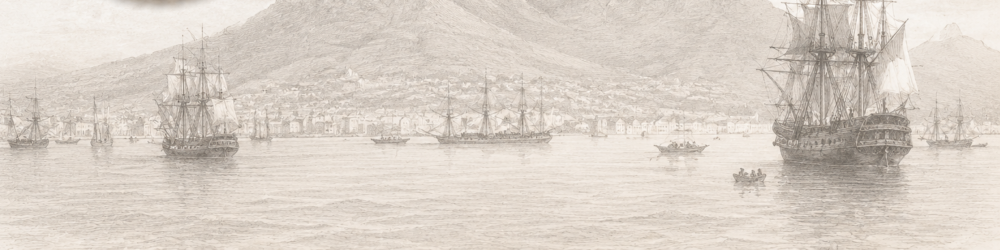

By Dr. Edmund Harrington, Historian, Cape Town
The Cape Chronicle, October 1886
The recent reports from the Transvaal of rich gold-bearing reefs on the Witwatersrand have set the colonies ablaze with speculation. What began as rumours of a modest find has swelled into confirmation of one of the richest gold fields the world has yet seen. As a historian who has chronicled the growth of our Cape Colony from its humble Dutch origins to its present stature under the British flag, I view this development with a mixture of profound hope and grave apprehension. The gold of the Rand will reshape Southern Africa, but the Cape, as the senior and most civilised portion of this subcontinent, stands at a crossroads.
The Positive Impacts
There is no denying the immediate economic stimulus this discovery will bring to the Cape. Our ports—Cape Town and Port Elizabeth foremost among them—will serve as the primary gateways for the influx of machinery, capital, and skilled labour required to exploit the reefs. Already, shipping manifests show increased tonnage bound for our harbours. Merchants in Adderley Street and the warehouses of the docks stand to profit handsomely as supplies flow northward.
The expansion of railways, long championed by forward-thinking men in our Legislative Assembly, will receive fresh urgency. The line from Cape Town toward Kimberley opened last year, must be extended to tap the wealth of the interior. This infrastructure will not only enrich our public treasury through increased traffic but will bind the distant Transvaal more closely to the Cape’s commercial orbit. Farmers in the Cape may find ready markets for their grain and wine, while wool from the border region could clothe the thousands streaming to the new diggings.
Moreover, the gold wealth will attract investment and population. British capital, already flowing into our banks and companies, will multiply. The Cape stands to become the financial and administrative heart of a richer South Africa, reinforcing our position as the most advanced colony on this coast. In time, this may even strengthen the case for a broader federation under the Crown, bringing stability and progress to regions long plagued by isolation and backwardness.
The Negative Impacts
Yet we would be foolish to ignore the shadows this glittering discovery casts. The Transvaal Republic, under President Kruger, has suddenly acquired the means to resist British influence far more effectively than before. Gold buys arms, builds fortifications, and attracts a turbulent population of Uitlanders—many of them British subjects—who may soon demand political rights. We risk a recurrence of the tensions that followed the annexation and retrocession of the Transvaal, but now amplified by vastly greater stakes.
For the Cape itself, there is the danger of internal drain. Young men of enterprise, artisans, and even farmers may abandon our settled districts for the quick riches of the Rand. Our labour market, already strained, could face shortages, while the cost of living in Cape Town rises as demand outstrips supply. The moral and social fabric of our society may suffer from the example of a lawless mining camp culture drifting southward—drunkenness, gambling, and the vices that have marred other gold fields.
More ominously, the political balance of power shifts northward. The Cape has long been the beacon of responsible government and British civilisation in South Africa. If the Transvaal grows fabulously wealthy while remaining under a narrow, conservative Boer oligarchy, it may draw the Orange Free State and other Afrikaner elements into a rival bloc. This could undermine the imperial connection that has served the Cape so well, fostering division rather than unity. We have seen how diamond wealth at Kimberley complicated governance; gold on a far grander scale may prove infinitely more disruptive.
A Cautious Path Forward
The discovery on the Witwatersrand is a force of nature—neither wholly benevolent nor wholly destructive. It offers the Cape unparalleled opportunity if we act with wisdom: investing in infrastructure, maintaining sound fiscal policy, and upholding the rule of law. But it also threatens to marginalise us if we remain passive while the centre of gravity moves to the highveld.
As historians, we know that gold has toppled empires and elevated backwaters in equal measure. Let the Cape Colony seize this moment not as a mere waystation for northern treasure, but as the enduring heart of a prosperous and united South Africa. Vigilance, enterprise, and loyalty to British institutions must guide us. The gold will flow—but it must enrich the Cape, not eclipse it.