
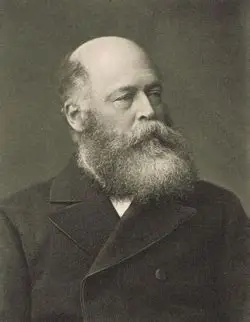
CAPE TOWN — In a moment that may redefine the future of governance at the southern tip of Africa, John Charles Molteno has today assumed office as the first Prime Minister of the Cape of Good Hope, following the long-awaited granting of responsible government.
For decades, political authority in the Cape has rested not with its elected representatives, but with a British-appointed Governor acting on behalf of London. That balance of power has now shifted dramatically.
The passage of responsible government legislation this year marks the first time that executive authority is vested in a locally elected parliament. From this day forward, the Prime Minister and his cabinet — drawn from the colony’s legislature — will hold direct control over domestic affairs.
Molteno, who has led this campaign for nearly two decades, now stands at the centre of this transformation.
The Man Behind the Movement
Molteno is no sudden arrival on the political stage. First elected to the Cape Parliament in 1854, he quickly emerged as a fierce critic of imperial overreach and a champion of accountable governance.
Throughout the 1860s, he led a sustained political struggle against successive governors — most notably Sir Philip Wodehouse — resisting attempts to centralise imperial control. In one particularly bold move, Molteno and his allies used parliamentary power to block funding to the Governor’s administration, forcing concessions from London.
A Reluctant Premier
In a surprising twist, Molteno did not initially seek the premiership. The position was reportedly offered first to respected liberal figures such as Saul Solomon and William Porter. Only after their refusal did Molteno agree to assume office himself — a decision that now places him at the helm of a new political era.
His appointment, to be formalised on 1 December, establishes him as the first Prime Minister in the colony’s history.
The Immediate Agenda: Reform and Stability
Sources close to the new administration indicate that Molteno’s government will prioritise:
- Financial reform, including the restructuring of colonial debt
- Infrastructure expansion, particularly railways and telegraph systems
- Agricultural development, with irrigation projects already under consideration
- Economic recovery, driven by booming diamond and export industries
Early signals suggest a pragmatic and economically focused administration, aiming to stabilise and modernise the colony.
Perhaps most striking — and controversial in some quarters — is Molteno’s firm commitment to the Cape’s non-racial franchise. Unlike other regions of southern Africa, voting rights in the Cape are not explicitly restricted by race, but rather by property qualifications.
Molteno has repeatedly defended this system, arguing that political stability depends on inclusivity rather than exclusion — a position that sets the Cape apart in an increasingly divided subcontinent.
Tensions with the Empire
While today’s developments have been welcomed locally, they may not sit comfortably with imperial authorities in London.
Molteno’s ministry is already expected to resist interference from Britain in regional matters, particularly regarding territorial expansion and frontier conflicts. His past opposition to imperial military interventions suggests that relations with the Colonial Office may become strained in the months ahead.
A New Political Era Begins
The creation of the office of Prime Minister — an institution that will serve as the primary channel between the colony and the Crown — signals a fundamental shift in governance.
For the first time, the Cape Colony stands not merely as a possession of empire, but as a polity with a measure of self-direction.
Whether this experiment in responsible government will endure remains to be seen. Yet for now, one fact is undeniable:
The Cape has entered a new age — and John Charles Molteno stands at its helm.