
By Staff Reporter | Eastern Cape Bureau
ALIWAL NORTH — Long before this quiet town on the banks of the Orange River carried the name of a battlefield in Punjab, it was known for something far older and far less martial: the water bubbling up hot and mineral-rich from beneath the earth.
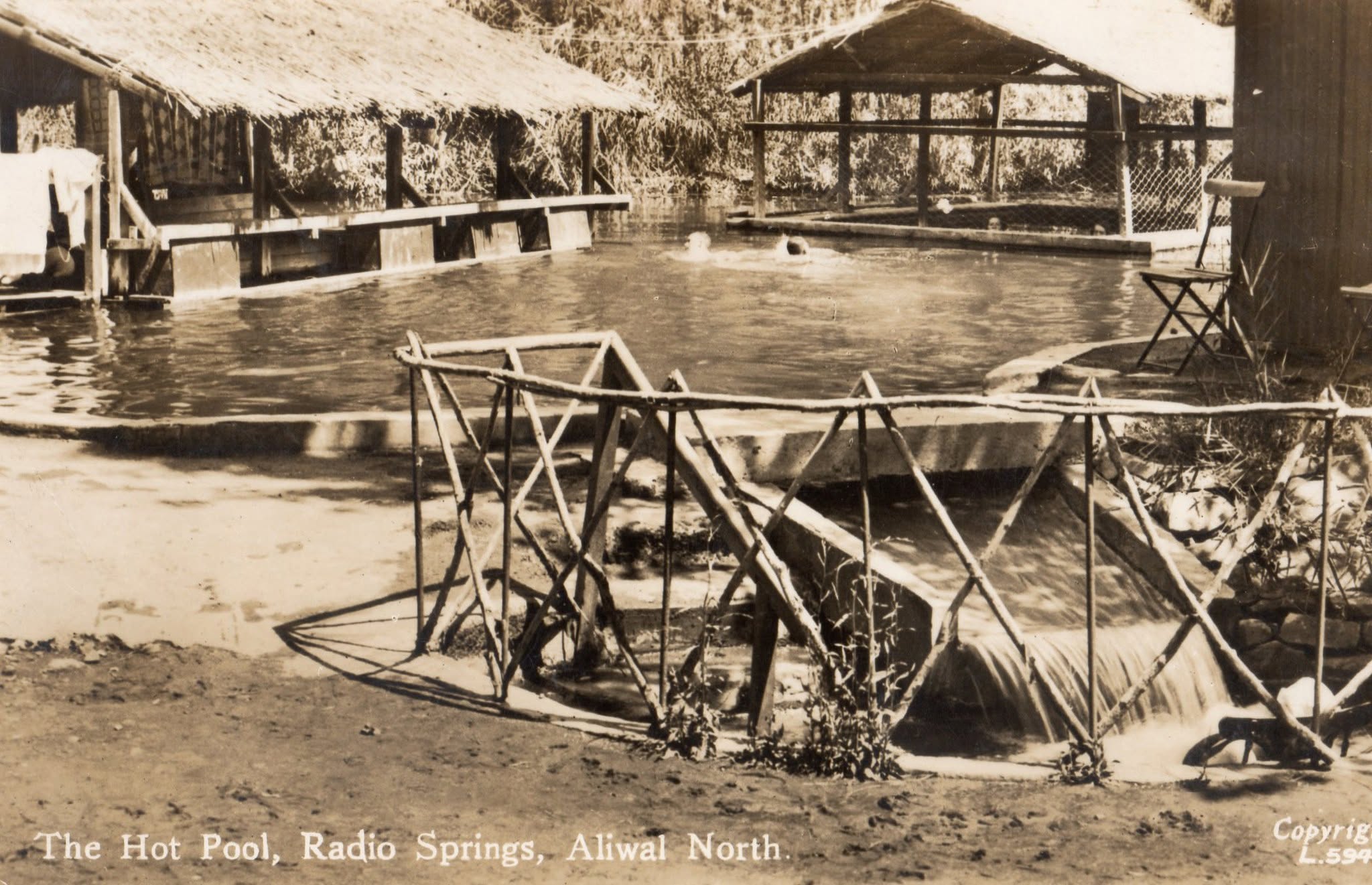
Today the Aliwal Spa’s pools sit at the edge of town, drawing a trickle of visitors seeking relief for arthritis and rheumatism, much as bathers did in faded 1952 photographs still held in South African archives. But the story of how a spring became a spa — and how a spa built a town — stretches back nearly two centuries, into the era of ox-wagons, river drifts, and colonial governors chasing the glory of a war fought thousands of kilometres away.
A Crossing Before a Town
The Orange River drift near present-day Aliwal North was, by all accounts, a working thoroughfare long before any settler laid a foundation stone. Khoisan groups and later Voortrekker parties used the ford to cross the river, and it was the presence of that crossing — paired with reliable water and the hot springs themselves — that made the site worth settling in the first place.
One of the earliest European arrivals, Pieter Jacobus de Wet, built a homestead nearby at Buffelsvlei around 1828, more than two decades before the town existed in any official sense. By the time Sir Harry Smith, Governor of the Cape Colony, formally founded the settlement in 1850, the springs were already a known and valued feature of the landscape.
Smith named the new town Aliwal — not for any local feature, but in tribute to his own military victory over Sikh forces at Aliwal in India on 28 January 1846. The town achieved municipal status two years later, in 1852. It is, in effect, a battle honour stamped onto a place whose real appeal had nothing to do with war.
Boomtown by the River
What turned Aliwal North from a river crossing into a regional centre was a combination the springs made possible: health tourism and trade, arriving almost hand in hand. A pontoon replaced the old ford in 1872, followed by the Frere Bridge in 1880. Then, in 1885, the railway line from East London reached the town, transforming it into a commercial hub for the surrounding farming districts, which produced wool, maize, wheat, beef and dairy.
The springs themselves were remarkable enough to become local legend. Early accounts describe gas seeping from the water in concentrations so high that the town’s first restaurant is said to have kept its cooking fire burning on gas piped directly from the springs — no firewood required.
Building the Spa
The resort infrastructure familiar to modern visitors is largely a 20th-century creation. The Aliwal Spa complex, credited to architect Leonard M. Bentel, was developed mainly between 1960 and 1978 and has remained government-owned throughout, now falling under the Maletswai Local Municipality.
A 1980 government tourism guide captured the scale of the operation at its peak: the main spring alone delivered more than two million litres of water a day at 35°C, with a second spring adding over a million litres more. Several large swimming pools — one of them enclosed — along with private baths, a Turkish bath and a massage centre, were all fed by the springs.
Water From Deep Below
Geologists who have studied the site attribute the heat not to any lingering volcanic activity — there is none recorded in the area — but to what’s known as a meteoric origin. Rainwater, the theory goes, sinks deep into the earth along ancient fault lines that cut through the Karoo rock formations, some of which were intruded by dolerite dykes roughly 180 million years ago. Heated naturally by the earth at depth and enriched with dissolved minerals along the way, the water eventually rises back to the surface through the same fault network — no eruption required, just geology working patiently over an immense span of time.
A Faded Grandeur
The springs have outlasted the fortunes of the resort built around them. Where a 1980 brochure once boasted of Turkish baths and massage centres, more recent accounts describe a complex that has fallen into disrepair, its buildings run down even as the main pool — kept full by rainwater seepage — remains, by some accounts, almost pristine. Tourism directories that once championed the spa now note, with some regret, that they can no longer recommend the venue in its current state.
Still, the water keeps coming — as it has, by every account, since long before there was a town here to name.