
Skip to content
November Issue:
Donate R500 to the Cape Chronicle during November
Header Image
Monday October 26, 2026
The Cape Chronicle

The Cape Chronicle

Events that shape the Cape since 1850

  • The Cape Chronicle: A Name Written Into the Heart of the Cape
  • About us
    • Editorial Charter
      • Editorial Team
    • Donate
  • Work for us
  • Support Local
  • Classifieds
    • Classified Ads – 1861
  • Contact us

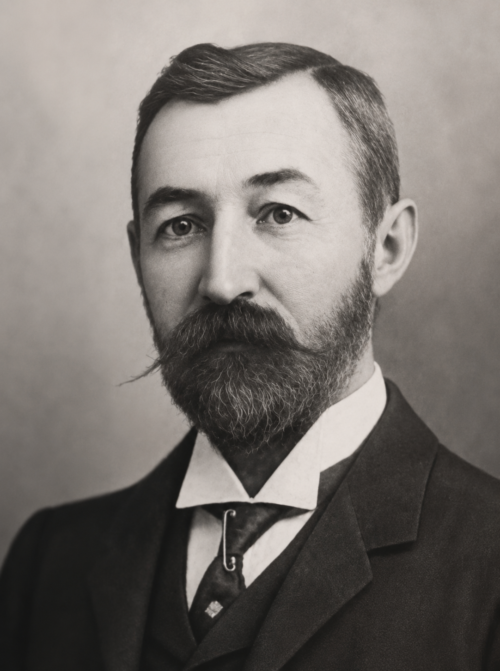
Author: Margeret Ashdown

Editor, The Cape Chronicle, 1886–1901


Margaret Ashdown was born in 1849 in Port Elizabeth, the daughter of a Methodist minister whose sermons, she later joked, taught her everything she needed to know about holding an audience's attention through discomfort. She was educated at a small mission school that took the unusual step, for its time, of teaching girls rhetoric alongside needlework, and she left it with a taste for argument that never left her.

Her early career was built in temperance journalism, writing for church-affiliated newsletters and reform pamphlets throughout the 1870s. It was unglamorous, poorly paid work, but it taught her two things she carried into every newsroom she later ran: how to make dry statistics — on drink, on disease, on wages — land with the force of a story, and how to keep writing in the face of an audience that would rather not hear it. By the early 1880s she had moved into more general reform journalism, covering public health and workhouse conditions for a Cape Town weekly, where her columns first caught the attention of the Chronicle's board.

Her appointment as editor in 1886, succeeding Edmund Carrow, was contentious before she had written a word in the role — she was the paper's first woman editor, and at least two board members are recorded as having voted against her purely on those grounds. She did little to soothe the skeptics and much to justify their worry, in the sense that they had feared exactly what she intended to do: widen the Chronicle's attention far beyond the trade and political coverage that had defined it for a quarter century.

Under Ashdown, the paper began running sustained investigative coverage of public health conditions in the city's poorer districts, of school overcrowding, and — most controversially — of labor conditions among dockworkers, a subject the paper's traditional readership among shipping interests found considerably less comfortable than harbor tariffs. The factory-conditions series of 1889, which documented injury rates and wage practices in unflinching detail, prompted the resignation of several board members who accused her of turning the Chronicle into an instrument of agitation rather than a newspaper. Ashdown's response, preserved in the paper's own pages, was simply that she intended to keep printing what was true whether or not it was comfortable.

Whatever the board's discomfort, the readership's was evidently smaller: circulation nearly doubled over her tenure, as the Chronicle became required reading for exactly the kind of reform-minded, church-going, increasingly literate public Ashdown had spent the 1870s writing for. She stepped down in 1901, worn by fifteen years of institutional friction, and spent her later years involved in public health advocacy work in Cape Town. She died in 1919.
Mr. John King Chosen to Lead the Newly Constituted Municipality of Durbanville
1873 to 1909 Cape History People

Mr. John King Chosen to Lead the Newly Constituted Municipality of Durbanville

Margeret Ashdown17 November 190121 July 2026

Durbanville, November 1901. A new chapter in the history of Durbanville was opened this week with the formal establishment of the Municipality of Durbanville, the village having now been invested…
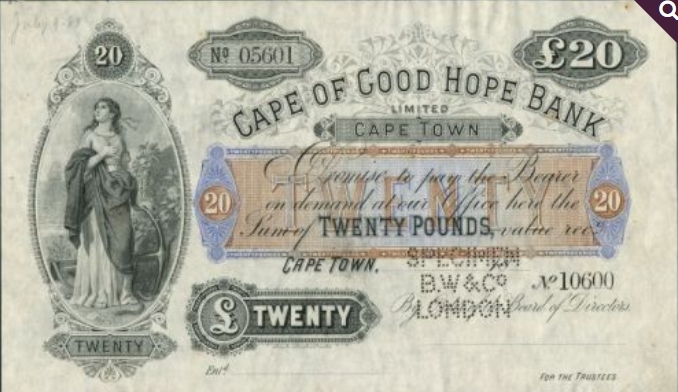
Celebrating 50 years of the Cape of Good Hope Bank
1873 to 1909 Cape History

Celebrating 50 years of the Cape of Good Hope Bank

Margeret Ashdown6 August 188721 July 2026

Half a Century of Faithful Service to the Colony In this year of Her Majesty’s glorious Golden Jubilee, our Colony has another proud milestone to celebrate. Fifty years ago, on…

Classified Ads

Timeline of the Cape

  • 1860 to 1872
  • 1873 to 1909
  • 1910 to 1948
  • 1949 to 1961
  • 1962 to 1984
  • 1985 to 1994
  • 1995 to 2005
  • 2006 to 2025

Subscribe to Our Newsletter

Oh hi there!!
It’s nice to meet you.

Subscribe to receive awesome content in your inbox, every Monday at 08:00.

We don’t spam! Read our privacy policy for more info.

Check your inbox or spam folder to confirm your subscription.

Reader opinions

  • Cape Chronicle launches R75 adverts for Small Businesses | The Cape Chronicle on Classified Ads – 1861
  • Albert on Hello Cape Town
  • Elaine van Vuuren on Hello Cape Town
Our October issue is sponsored by
Our August issue is made possible by
Advertise with us at the
A Work in Progress

The Cape Chronicle is a work in progress and are updated as and when resources allows.

We highly recommend readers to subscribe to our newsletter to get regular updates.
Our new team of reporters are currently being updated and articles will soon be upgraded with photos of the time.

Our September issue is made possible by
Discover the Western Cape with
En route to Unity?
Celebrating almost 50 years…

Seniorfit60Plus, under leadership of fitness instructor Juliana le Roux Maritz, has been serving the communities of Parow and Bellville since 1978.

Originally started by Ria (H M) Maritz, mother of the Cape Chronicle’s publisher, in a small hall in Parow Vallei (Formerly Tiervlei), the business kept serving the community of local seniors as a member of the SA Seniors Fitness Association.


Copyright © 1850 - 2026 The Cape Chronicle | Published by WTG Media & Marketing SA - The guys behind Follow Me Outdoor Magazine

| Classica Press by Ascendoor | Powered by WordPress.