
THE STEAMER KADIE ASHORE AT THE RIVER MOUTH
Breede River Mouth, Saturday, 18th November, 1865
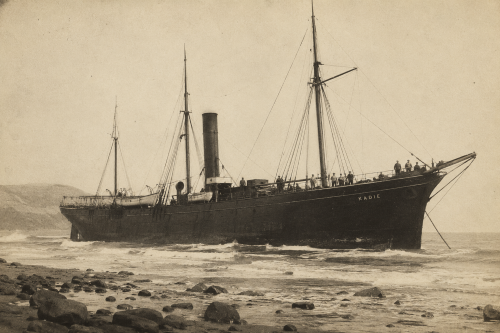
Yesterday morning a scene of uncommon excitement and melancholy presented itself at the entrance to the Breede River, where the well-known coastal steamer Kadie, a vessel long familiar to all who trade upon this shore, was driven hard aground while attempting the passage over the bar.
At an early hour the weather was fair enough, with the sea lifting steadily against the mouth and a freshening breeze out of the south-west. Several residents and river men had gathered on the banks, as is often the custom whenever a steamer is expected from sea. Shortly after the vessel came into view beyond the surf line, steaming in with measured confidence, her funnel throwing up a dark ribbon over the bright morning.
For a moment all appeared ordinary.
The Kadie took her accustomed line toward the entrance, lifting and dipping heavily as she neared the rollers. Then a stronger sea than those preceding broke across her bow. Those watching ashore could see her sheer from her course. Orders rang out aboard. The screw beat the water furiously and for a brief instant it seemed she might answer her helm and recover.
But the river mouth would not yield her passage.
A second heavy swell drove her broadside, and with a violent strike she was thrown upon the western bank among the rocks. The crash was heard distinctly on shore above the roar of the breakers. Men ran along the sand and over the low ridge to gain a better vantage. Spray rose white over the stranded vessel while the sea continued to pound her quarter.
Mercifully, all aboard are reported safe.
Throughout the afternoon her crew remained busy securing what could be secured while boats passed to and fro in the river water behind the surf. The steamer lies fast, her dark hull plainly visible against the white water, and though she still holds together at the time of writing, there is grave doubt whether she may be got clear.
The sight has deeply affected many here, for few vessels are better known along this coast than the little Kadie.
Built in Scotland and sent out to the Colony some six years past, she soon became a familiar and welcome visitor upon the southern route. Her regular passages between Port Beaufort and Cape Town made her a figure recognised not only by merchants and captains, but by townsfolk and farm families who timed their business to her arrival.
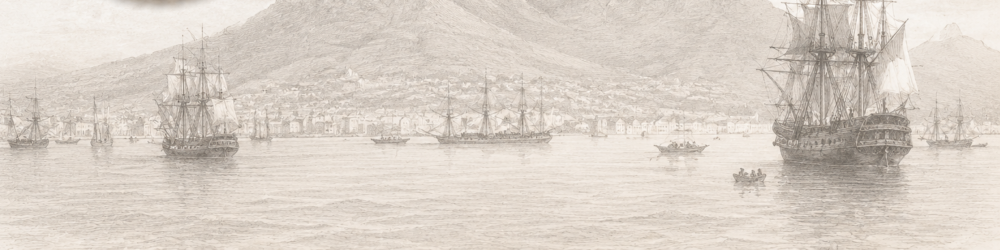
In Cape Town she was a common sight entering Table Bay after rounding Agulhas, often weather-stained from the voyage, her decks laden with produce from the district and merchandise bound inland. She carried wool from the country, skins and grain from the farms, and frequently passengers making the trip between the Breede and the capital.
Many in the city knew her whistle.
Children at the docks are said to have run to the quay at the sound of her approach, and warehouse hands along the bay could identify her at distance before another man had raised his glass. She was not a large vessel, nor built for grandeur, but she had a brisk and resolute character much admired by seafaring men.
Those acquainted with the passage know well what service she performed. The run eastward from Cape Town was no idle excursion. Around the Cape and beyond Agulhas the weather could turn in an hour, and yet the Kadie maintained her route with remarkable regularity. More than once she made harbour after weather that would have sent lesser craft seeking shelter.
There are men upon the Breede who can recount a dozen arrivals through mist or rough sea when her appearance beyond the breakers brought relief and loud cheering from shore.
Such was again expected yesterday.
Instead there remains the painful spectacle of the vessel resting helplessly under the force of sea and wind, watched by anxious eyes from the bank and by men aboard who know every timber and plate of her.
As dusk settled over the mouth last evening her funnel still stood against the fading sky, and lanterns could be seen moving about the deck while the breakers continued their relentless work.
Your correspondent remains at the scene and shall furnish further particulars as they become known.